https://oscarpeterson.bluemusicgroup.com
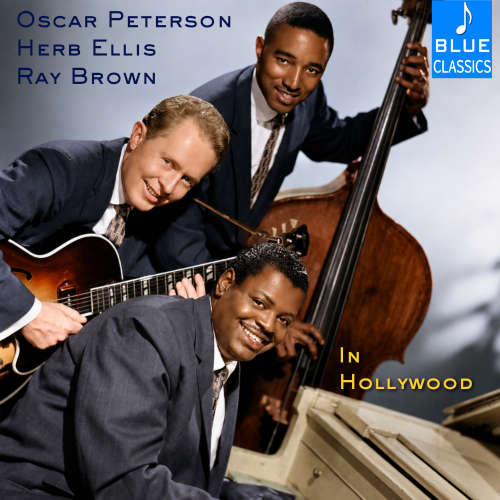 In Hollywood
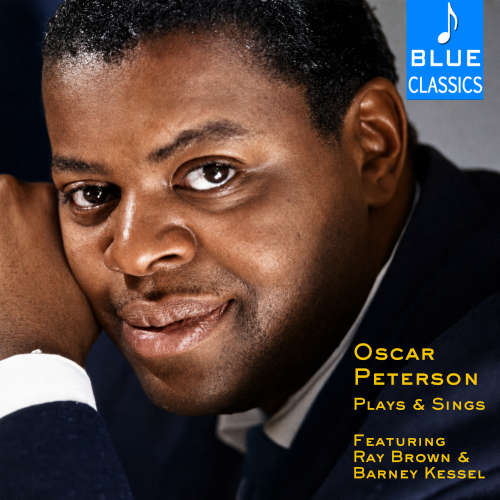 Oscar Peterson Plays & Sings
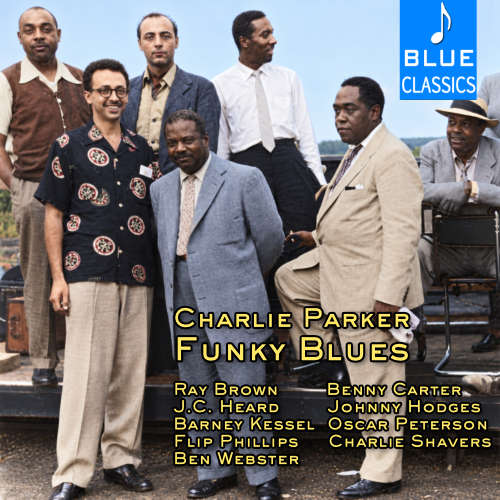 Funky Blues
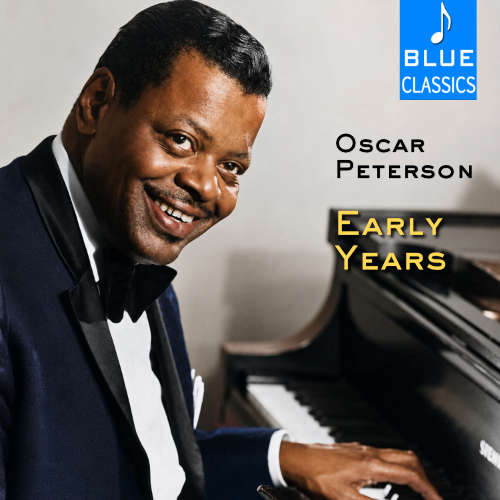 Early Years
 Sessions 1951-54

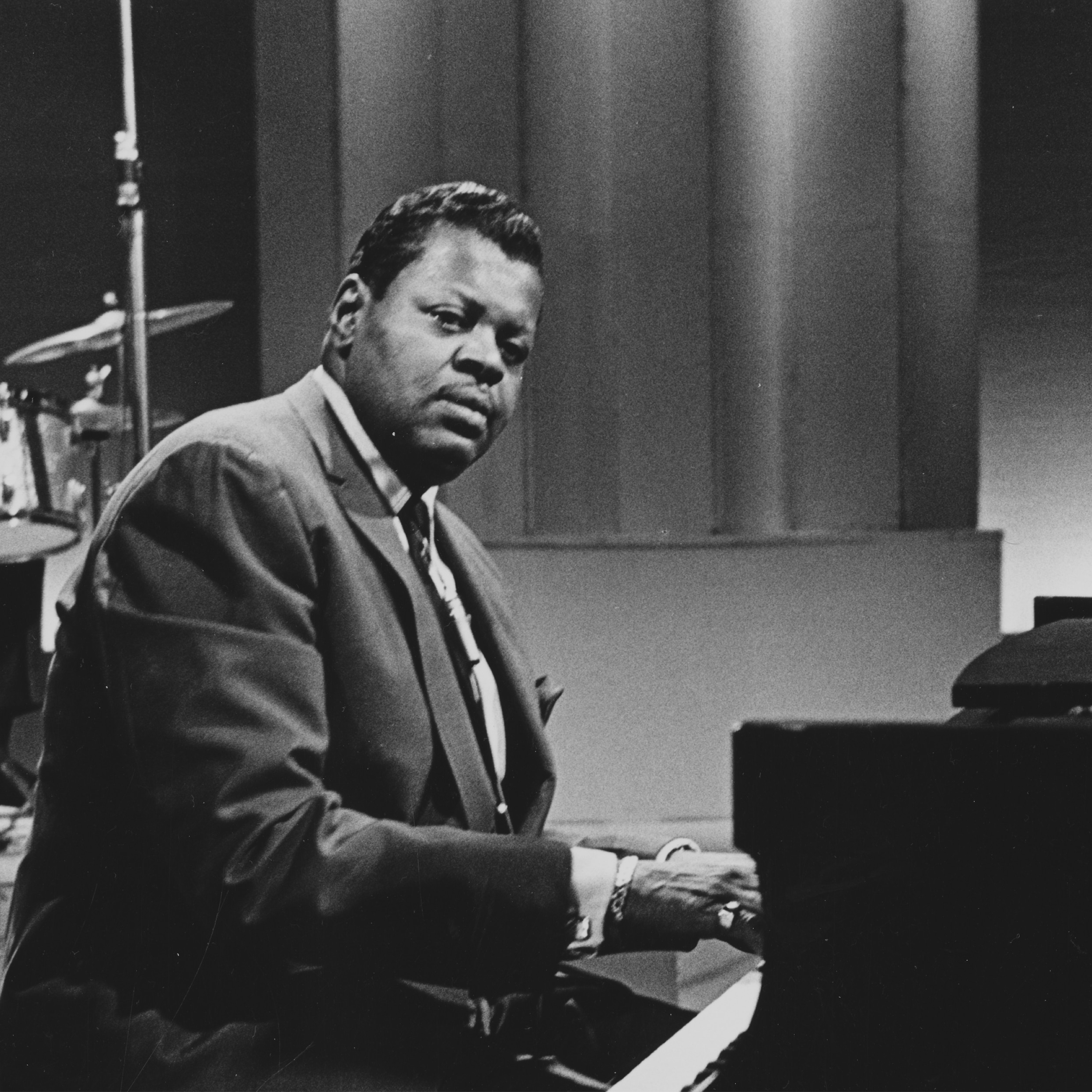
Oscar Peterson - pianist
Oscar Peterson (b. August 15, 1925 – d. December 23, 2007) was a Canadian jazz pianist and composer whose career extended across nearly seven decades. Born on August 15, 1925, in Montreal, Quebec, he grew up in the city's Little Burgundy neighbourhood in a family of West Indian origin. He began studying piano with his sister Daisy Peterson and later studied with Lou Hooper and the classical pianist Paul de Marky. He also attended the Conservatoire de musique du Québec à Montréal. His early training combined classical piano study with the popular and jazz music he encountered in Montreal.Peterson's first significant public success came when he was still a teenager. In 1940, at the age of 14, he won a national music competition associated with CBC radio. He subsequently appeared regularly on Montreal radio, including his own programme Fifteen Minutes Piano Rambling. His early broadcasting helped establish him as a young pianist to be followed in Canadian musical life.
In the early 1940s Peterson moved increasingly toward professional performance. In 1943, he left school to join the Johnny Holmes Orchestra, a popular Montreal dance band. He remained with the orchestra until 1947, becoming its featured pianist. During this period he was also gaining national exposure through CBC broadcasts.
Peterson began recording commercially for RCA Victor in Montreal in 1945. His first recordings included I Got Rhythm and The Sheik of Araby, issued as 78 rpm records. The recording activity continued through the second half of the 1940s, with Peterson recording 32 selections for Victor between 1945 and 1949. These early recordings document a pianist whose musical language was still developing while already displaying a highly developed technique and a strong connection to the swing tradition.
The recordings of these years show Peterson working in several different settings. His earliest Victor sessions included small groups with musicians such as Bert Brown, Frank Gariepy, Armand Samson, Roland Verdon, Russ Dufort, Albert King, Mark “Wilkie” Wilkinson, Austin Roberts, and Clarence Jones. Some sessions were essentially small-group performances, while others placed Peterson in more traditional rhythm-section settings. The early repertoire included standards, popular songs, blues, boogie-woogie and pieces associated with the swing tradition.
Although Peterson's technique was already highly developed, his early playing belonged to a musical environment different from that of his later American recordings. AllMusic characterizes these 1945–49 Victor performances as reflecting influences from boogie-woogie and from pianists such as Teddy Wilson and Nat King Cole. His relationship to bebop was initially less direct, but his playing was already technically accomplished and increasingly individual.
In 1947, Peterson formed his first regular trio, with Austin “Ozzie” Roberts on bass and Clarence Jones on drums. The trio established a residency at the Alberta Lounge in Montreal, and from 1947 to 1949 its performances were broadcast by CFCF radio. These broadcasts became an important part of Peterson's growing reputation.
The Alberta Lounge was particularly significant because it was there, according to accounts preserved by the Canadian Music Hall of Fame and other Canadian sources, that Norman Granz heard Peterson's playing during a visit to Montreal in 1949. Granz, the American producer and founder of Jazz at the Philharmonic (JATP), was sufficiently impressed to seek him out at the club. Peterson was subsequently invited to appear as a surprise guest at a JATP concert at Carnegie Hall in New York in 1949. He was only 24 years old.
The Carnegie Hall appearance marked the beginning of Peterson's international career. He subsequently joined Jazz at the Philharmonic as a touring musician and became closely associated with many of the leading figures in American jazz, including Ella Fitzgerald, Ray Brown, Roy Eldridge, Herb Ellis, Clark Terry, Lester Young, Dizzy Gillespie, and Lionel Hampton. The touring system established by JATP gave Peterson access to concert audiences throughout North America and, later, internationally.
The period around 1949–50 also brought an important change in Peterson's recording career. After Norman Granz discovered him, Peterson began recording for labels associated with Granz, including Clef and later Verve. In 1950, he made a series of duo recordings with bassist Ray Brown and, on some sessions, Major Holley. His recording of “Tenderly” became a hit and helped establish him with a much wider American audience.
The collaboration with Ray Brown became particularly important. In 1952 Peterson formed a trio with Barney Kessel on guitar and Brown on bass. When Kessel left the group the following year, Herb Ellis became the guitarist. The Peterson–Brown–Ellis trio developed the format that would become one of the most recognizable piano-bass-guitar combinations in jazz. Peterson's preference for the trio setting would remain a major feature of his career.
Peterson's musical conception was closely tied to the piano as a complete instrument. He made extensive use of the full keyboard, combining powerful bass lines, chordal textures and rapid melodic improvisation. His technique allowed him to move easily between dense chordal passages and single-line improvisation. Yet the trio setting also demanded interaction: the bass and guitar were not merely accompaniment, but active parts of the rhythmic and harmonic structure.
His admiration for Art Tatum was significant in his development. Peterson later recalled hearing Tatum as a teenager and being overwhelmed by the pianist's technique. Tatum became one of the central influences on Peterson's conception of the piano, alongside the swing pianists he had studied during his youth.
Peterson also developed as a composer. Among his later compositions are the Canadiana Suite, Hymn to Freedom, African Suite, A Royal Wedding Suite, Hallelujah Time, and Trail of Dreams: A Canadian Suite. His work as a composer was closely connected with his identity as a Canadian musician, even after his career had become international.
Despite the rapid expansion of his international career, Peterson maintained a strong connection with Canada. He lived in Montreal until 1958 and subsequently based himself in Toronto and Mississauga. His career included appearances at major international festivals and concert venues, while he continued to represent Canada internationally.
During the 1950s and 1960s Peterson became one of the most frequently recorded jazz pianists of his generation. His discography expanded through recordings for Clef, Norgran, Verve and later other labels. His collaborations ranged from intimate trio and duo performances to large ensembles and recordings with singers and other instrumentalists. His work with Ella Fitzgerald and Louis Armstrong produced a series of recordings beginning in the mid-1950s, while his association with Norman Granz continued to shape his recording and touring activities.
Peterson's career was also unusual in its longevity. For much of his life he remained active as a touring musician, performing around the world well into his later years. His music was recorded on hundreds of releases, and his influence extended beyond jazz musicians to generations of students and pianists who studied his recordings and arrangements. His playing became associated with technical command, rhythmic precision, harmonic fluency and a strong sense of swing.
In 1993, Peterson suffered a stroke that affected the use of his left hand. The injury placed obvious limitations on his playing, but he continued to perform. Accounts of his later career emphasize his determination to continue making music rather than abandoning public performance.
Oscar Peterson died on December 23, 2007, at the age of 82. By then, his career had encompassed radio broadcasting in Montreal, early RCA Victor recordings, Jazz at the Philharmonic, decades of international touring, hundreds of recordings and a substantial body of compositions. His legacy has continued through recordings, archival releases, educational work and the continuing performance of his compositions.
The recordings from Peterson's early years are particularly useful for understanding how that career began. Before the international recognition brought by Norman Granz, he had already spent years developing his craft in Montreal: through radio, dance bands, club performances and RCA Victor sessions. The 1945–1949 recordings preserve this period of development, when the young Montreal pianist was establishing the technical and musical vocabulary that would soon carry him to American and international audiences.